April 27, 2026 - A PILE OF BANJOS
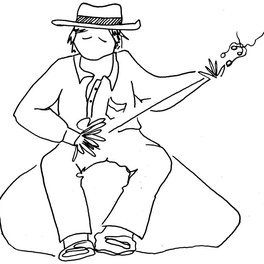
This has been Bernunzio’s logo for years. It was done about 1975.
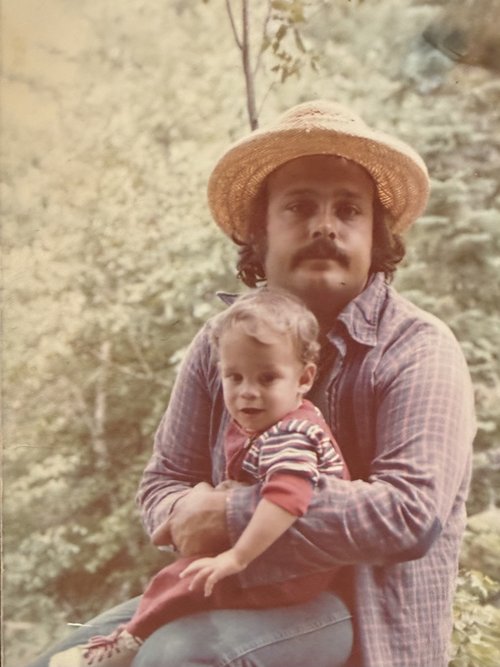
Before I was holding my banjo, I was holding my baby boy, Jay Andrew Bernunzio around 1975, same hat, same hair same guy!
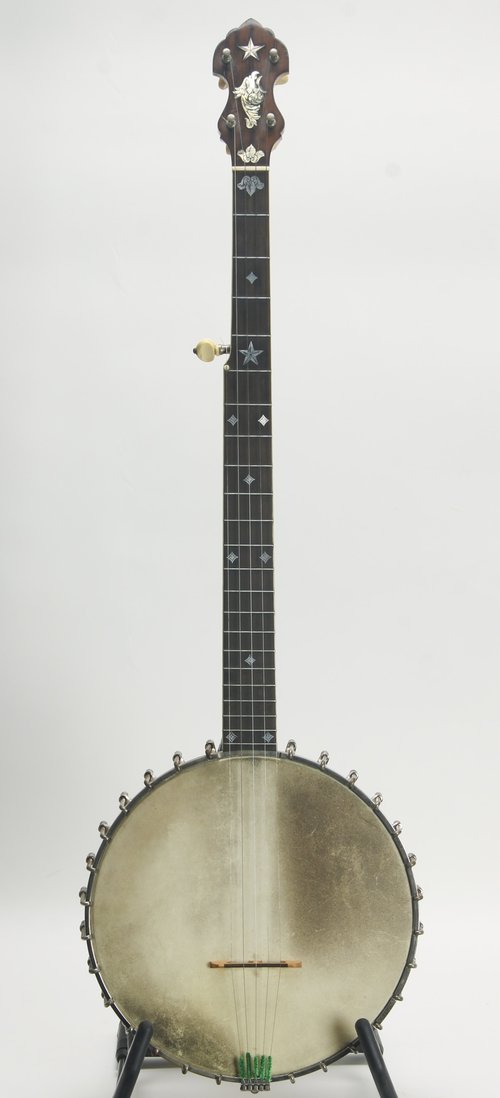
Later period, A.C. Fairbanks Whyte Laydie No. 2 from 1908, just before the Tubaphone tonering was introduced, and a couple years before Fairbanks-Vega stamps replaced the engraved maker plaques on dowel sticks. The multi-ply maple 10-15/16" diameter rim assembly is 3/8" thick, equipped with original nickel plated hardware (notched tension hoop, No Knot w/ moveable cams, bracket-band, neck adjustment hardware, hooks/nuts/shoes), with tortoise binding on both interior edges, , model stamps on dowel, with engraved A.C. Fairbanks plaque on dowel stick); some tarnish and dullness present metal parts, with dings and impressions on wooden rim, and wear on exterior of old skin head. The three piece maple neck has a 27" scale pearwood fingerboard w/ 1-5/16" nut width, lightly worn original bar frets, finely engraved pearl inlay on fretboard and sporting a proud griffin on the pearwood peghead overlay (unfortunate vertical cracks on pearwood peghead overlay have been filled and secured); equipped with original Champion friction tuners; some light wear on back of neck; some light forward bow present, but a great player with low/medium action w/ 1/2" bridge. Includes later hard case
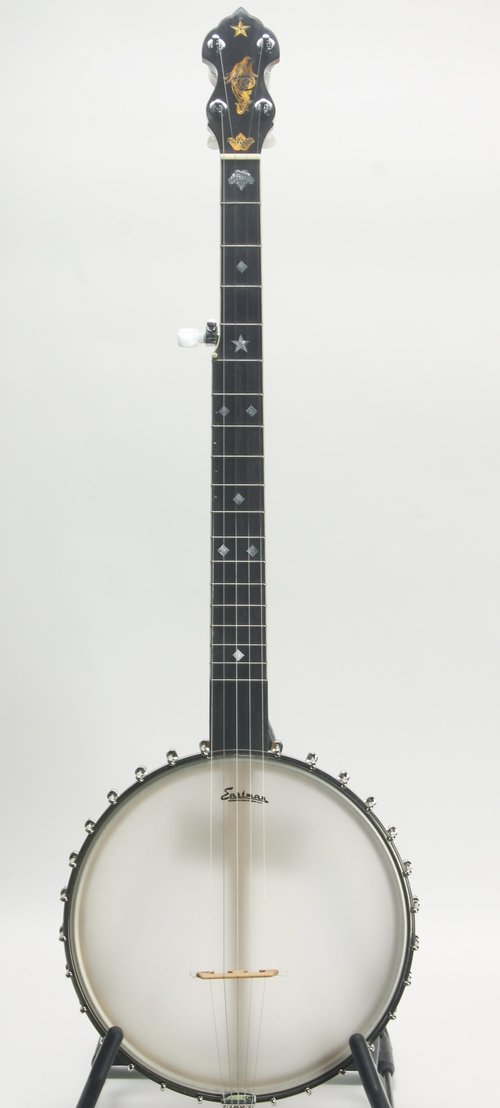
This example comes to us in great condition from its previous owner - having been used sparingly overall. The neck is nice and straight with minimal fret wear with added spikes on 7/8/9/10, and with scooped ebony fingerboard for frailing. The result of a passionate years-long collaboration between John Bernunzio and the Eastman Music Company, this banjo in-every-way recreates the extant 1903 example referenced in design, having underwent a full-prototyping process with John, and features a light weight, thin 3/8" thick and 10-3/4"in diameter rim assembly w/ scalloped Whyte Laydie tonering/bracket band. We remain incredibly impressed with this banjo, and wish we could still get them in new. All of the metal parts/hardware were painstakingly replicated, from neck ferrule to long collar, noting even the rounded "bulbs" of the repro No Knot tailpiece with deep string slots; grooved tension hoop. The maple neck is fully bound w/ 25.75" scale ebony fingerboard, finely engraved pearl in the period style, and notably a Gryphon on the peghead's face. Includes reproduction Bump case.
Perfectly executed conversion from Kevin Enoch, completed in 2017, utilizing an original 10-3/4" diameter 1920 Fairbanks-Vega Style M Tubaphone rim assembly, with custom curly maple neck in the style of a Whyte Laydie No. 2 from Fairbanks' finest period. The maple rim assembly has an old Rogers skin head, original neck hardware, perforated Tubaphone tonering, notched tension hoop, Vega stamped armrest, closed end nuts, with original dowel stick retained from four string neck; some light tarnish, scratches present on metal parts. The 25.5" scale three piece neck is of gorgeous flamed maple, with a fully bound ebony fingerboard with tapered frailing scoop, delicate engraved pearl inlay including a star and scalloped diamonds, with engraved gryphon inlaid into the ebony peghead overlay, 1-5/16" wide bone nut, equipped with Gotoh geared tuners with ivoroid buttons; spikes present 7-10. An exceptional player, with low action and setup with an 11/16" Bart Reiter solid maple bridge; tone is pure Tubaphone but more focused than usual.
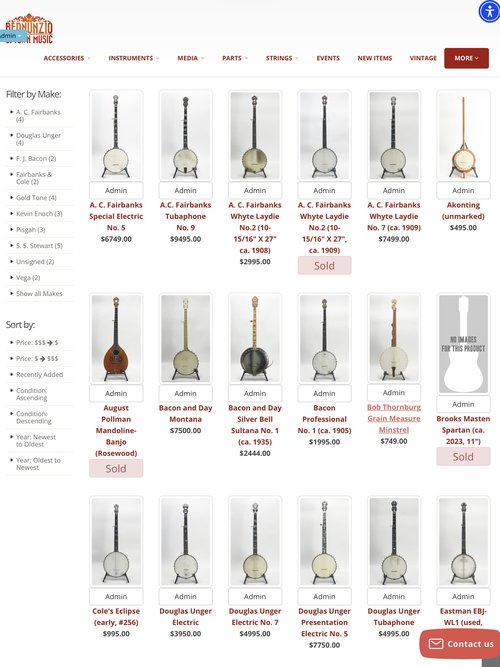
One of 10 pages of banjos that we have for sale
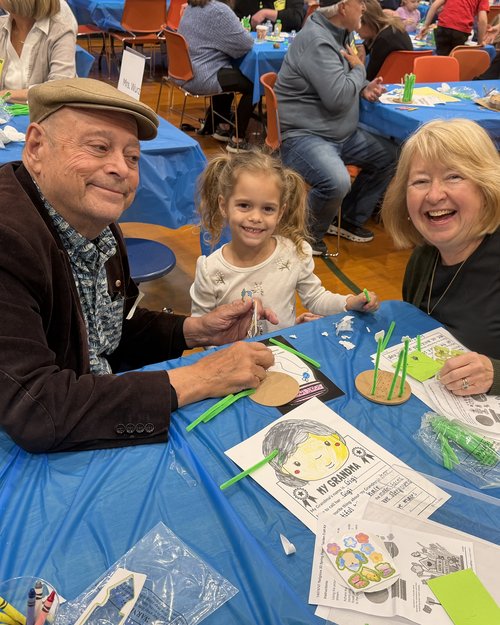
Friday was grandparents day at Saint Joseph school in Penfield where our twin granddaughters attend. Sadly, Olive was not able to attend because she was sick at home.
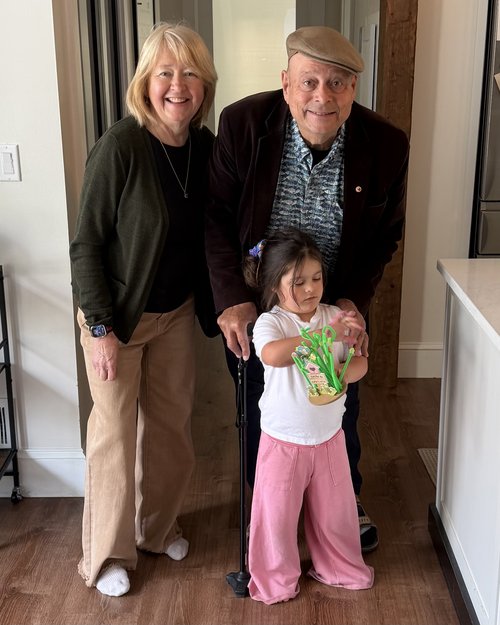
….. but we went to her house and did the project with her. She was so sweet. They both are gems.
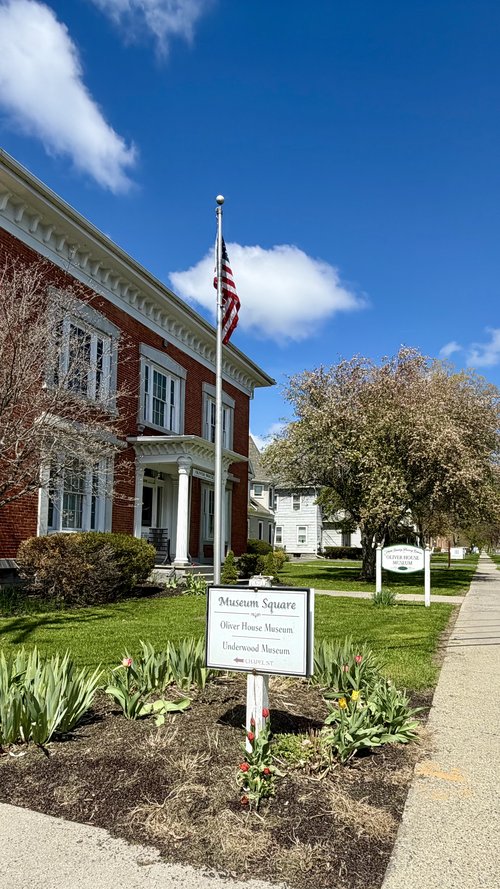
Some sure signs of spring around Penn Yan
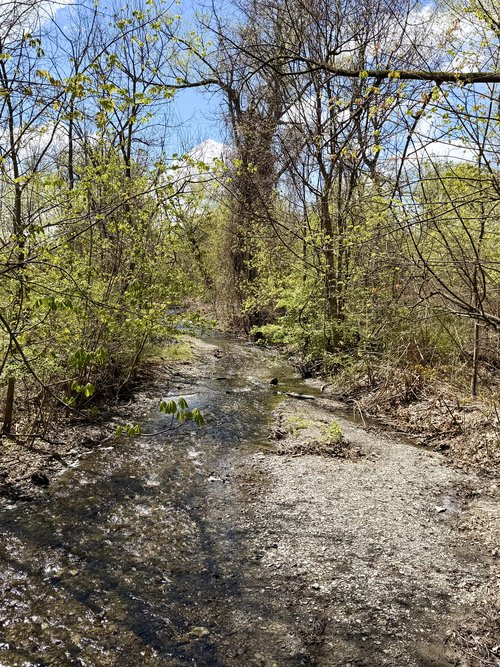
Some sure signs of spring around Penn Yan
A PILE OF BANJOS
April 27th, 2026
Good morning friends,
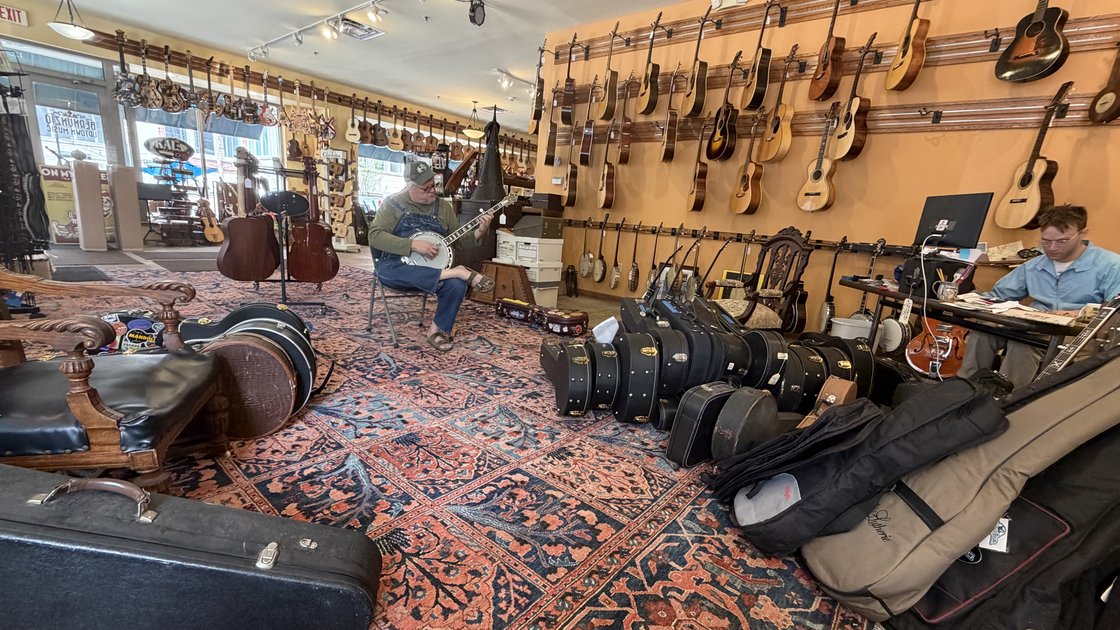
The instruments are piling up like crazy lately. People have been coming in with two, three,four and a dozen orphaned instruments that need our attention. We continue to purchase vintage and used instruments for our worldwide clients. One of the great classic vintage banjos was called the "Whyte Laydie". It was a refinement and A. C. Fairbanks 1890 patent for the electric banjo, which was not actually powered by electricity, but had an "electrifying" sound which they claimed was the result of the scalloped metal ring that sat on top of the wooden rim. The Whyte Laydie was a new refinement for the new century. It was introduced in 1900 and was the work of David L. Day. It is said that the name came from a sailboat that he saw in England while on a trip. It is very similar in design to the "electric" model, BUT there is a band of metal on the outside which supports all of the shoes and hooks, resulting in no piercing of the wooden rim. It became the standard and most sought after sound of banjos of the classic era and then many years later for old time aficionados. In 1909 the Whyte Laydie was surpassed by the newest addition the "Tubaphone" which was a square brass ring with holes drilled in it. Supposedly the new model gave clearer tones in the higher registers.
At any rate, I’ve been a fan of both models and we have lots of these banjos in stock. An interesting point is that we have several original instruments untouched for 125 years with the original non-geared pegs and set up with light gut or nylon strings. There are not a lot of takers for these banjos and it’s easier for me to sell a reproduction and in many cases of the reproduction will be more or equal to the original in value.
Pricing instruments is always difficult. I’d like to say we rely on sound and play ability, but there are many factors that take into account. One of the most important scale length. The Whyte Laydie banjos had a 26 inch scale length and later 27 and 28 for more professional players. The longer scales seemed to be unwieldy for old-time style playing, and therefore are often priced lower than equivalent models with the shorter scale. The banjo in the first picture is in original 1909 Fairbanks banjo it is priced less than the Enoch, which is a fantastic player BUT with a custom, replacement neck by the renowned builder, Kevin Enoch. The real deal is the “Eastman” with a scoop for half the price of the Enoch custom. I designed this banjo personally with “Eastman Stringed Instruments" nearly 20 years ago. It is a faithful recreation of a 1903 banjo and it was the instrument that I was looking for my entire life and that’s what I have at home for my meager playing. Today, they sell used" for more than they originally sold for when they first came out.
Anyway, a bit of banjo lore for those addicted. We will be traveling again, this week we are to Houston!
With peace,
John Bernunzio